 Login
Login
 Register
 Blog
Blog


Are Free TikTok Likes Safe?
No third-party exposure method can be described as completely risk-free. A useful safety review asks what access the service requests, who performs the actions, how activity is delivered, and whether the limitations are explained honestly.
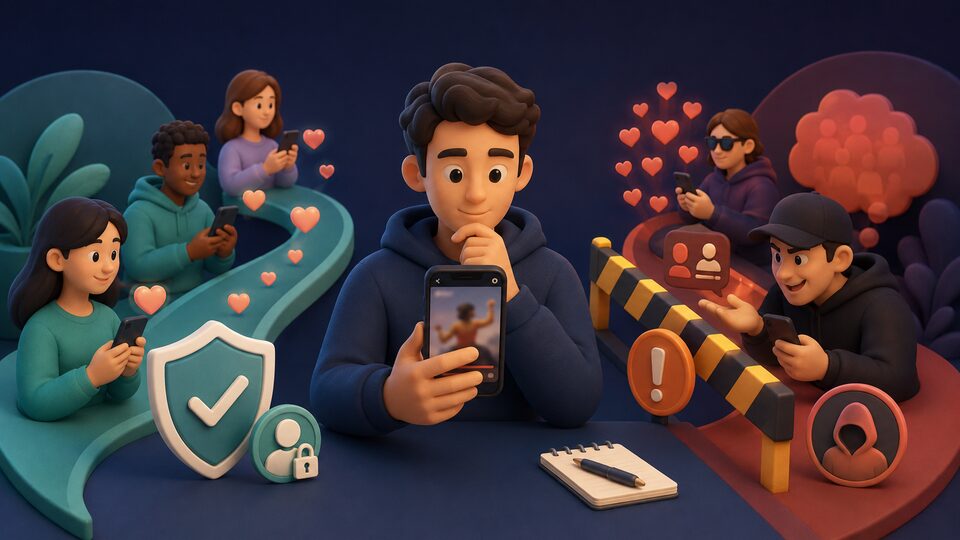
Five questions to ask first
Does it request a password?
A public video URL should be enough for public exposure. Never give a third party your TikTok login or verification code.
Are actions voluntary?
Real community participation has a different risk profile from software that controls or imitates accounts.
Can you control pacing?
Moderate testing is easier to evaluate than an unexplained burst.
Are limitations visible?
Drop, delay, filtering, and variable delivery should not be hidden behind permanent-result claims.
Stop when you see these warning signs
| Warning sign | Why it matters |
|---|---|
| TikTok password, cookie, or verification-code request | It creates direct account-security exposure. |
| Software, extension, or unknown app installation | It may automate actions or access data beyond a public link. |
| Huge instant volume with permanent guarantees | The promise hides filtering, account removal, and user reversal risk. |
| Endless “human verification” or paid-survey loop | The advertised service may be a deceptive acquisition funnel. |
“Safer” does not mean guaranteed
Real people can remove a like, accounts can become unavailable, and public counters can refresh. A count decrease alone does not reveal which event occurred. Read why TikTok like counts can change.
A lower-risk way to test visibility
- Use a public video that already has normal viewing activity.
- Start with a limited amount instead of an extreme jump.
- Avoid running several aggressive services simultaneously.
- Measure watch behavior and real audience response, not only likes.
- Stop if the method asks for credentials or hidden permissions.
For the mechanics and expectations, see the main free TikTok likes guide.