
Likes
Post-level visible response. Continue to the dedicated Like Exchange guide.
 Login
Login
 Register
 Blog
Blog

A social media exchange connects member participation, credits, public campaigns, and several interaction types across supported networks. This is the high-level map; the other two exchange guides explain individual signals in greater detail.
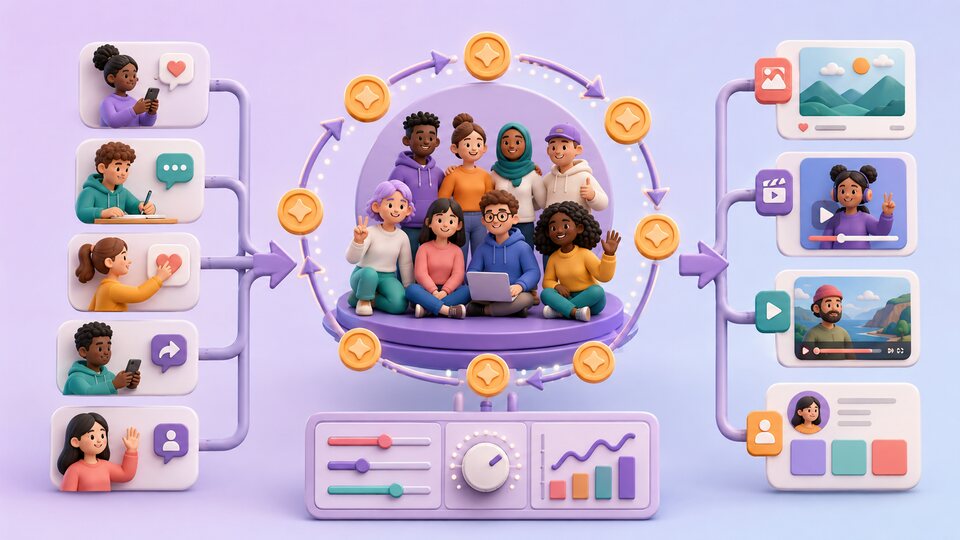
Start with the platform workflow, understand the signals, then open the focused exchange or platform guide.
Post-level visible response. Continue to the dedicated Like Exchange guide.
Profile- or channel-level interest whose later retention can change.
Exposure to video content; a view total alone does not explain attention or completion.
Visible conversation that needs relevance and context, not only volume.
Actions with different meanings and availability depending on the network.
Several signals considered together. See Engagement Exchange.
The exchange model is broad, but eligibility, verification, delivery, retention, and the meaning of each public signal differ by network. Start from the relevant platform map:
Other focused starting points include YouTube exchange options, Facebook likes, and the platform links available through Like4Like navigation.
| Goal | Possible use | Better evidence |
|---|---|---|
| Test presentation | Controlled initial visibility for prepared public content | Relevant response and profile actions |
| Compare content | Similar pacing on two comparable posts | Attention and downstream outcomes |
| Build an audience | Limited discovery support | Retention, return behavior, and topic fit |
| Guarantee viral growth | Not an appropriate use | No exchange controls platform recommendation |
Exchange activity cannot guarantee recommendation, permanent likes or followers, watch retention, sales, search ranking, or loyal audience growth. People can reverse actions, accounts can become unavailable, and networks may adjust visible totals.
Not in Like4Like’s community participation model: available actions are completed by members. Avoid services that request credentials or automate a social account.
Credits organize participation and campaign exposure inside the service. Their use and availability follow the site’s current rules.
No. It can support a visibility test, while organic audience development depends on content, relevance, retention, and repeated voluntary interest.
You can also purchase promotion directly and start gaining followers and likes immediately, without registration.